

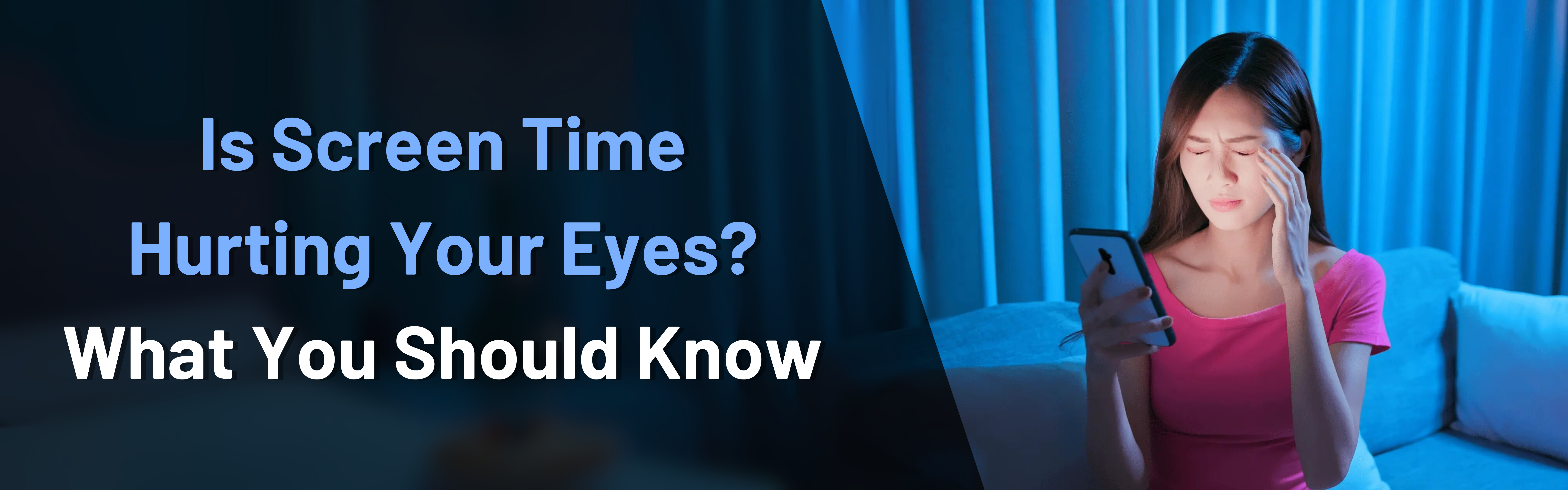
In today’s world, we spend a lot of time looking at screens—phones, laptops, TVs. But too much screen time can make your eyes feel tired, sore, or dry. This is known as eye strain, and it’s more common than you might think.
Eye strain is a group of problems that happen when your eyes get tired from working too hard. It usually happens when you spend too long focusing on something up close—like a screen, a book, or even driving.
You might feel:
Dry, itchy, or watery eyes
A burning or stinging feeling
Blurry or double vision
Headaches
Sore neck and shoulders
Trouble focusing or feeling sleepy
These problems don’t usually cause permanent damage, but they can affect how you feel and how well you work or study.
Anyone can get eye strain, but some people are more likely to experience it than others—especially those who spend a lot of time using screens. Children, teens, students, and office workers are among the most common groups who struggle with this issue.
Eye strain is especially common for:
Office workers and students using screens for long hours
People who scroll on their phones in bed
Children and teens doing online learning or gaming
People who don’t wear the right glasses or contact lenses
People who use screens in poor lighting or with bad posture
One study in Palestine showed that 44% of students aged 11–18 experienced eye strain, especially when using their phones at night or in poor posture.
Our eyes are designed to move and shift focus regularly—but staring at a screen makes them work in the same way for a long time. This puts extra pressure on your eye muscles, especially when you’re in poor lighting or forget to blink often.
Here are some of the main causes:
We blink less when we look at screens—this dries out our eyes
Bright screens and glare make your eyes work harder
Small text and bad lighting can cause squinting and strain
Looking at screens too closely makes your eye muscles tired
Staring for too long without breaks means no rest for your eyes
Yes. The longer you stare at a screen, the worse the symptoms can become. Even short tasks like answering emails or watching videos can cause discomfort over time if you don’t give your eyes regular breaks.
In one recent study, people doing a 60-minute screen task had increasing eye discomfort over time, especially when the task was mentally difficult. Productivity even dropped when symptoms got worse.
The good news is that you don’t need to stop using screens altogether. By making small changes to your habits, you can keep your eyes comfortable and healthy—even during long work or study hours.
Here are simple tips to try: 1. Follow the 20‑20‑20 Rule
- Every 20 minutes, look at something 20 feet away for 20 seconds. This helps relax your eye muscles.
- Keep your screen about an arm’s length away
- Make sure your screen is at or just below eye level
- Avoid glare by sitting away from windows or bright lights
- Use larger text and zoom in if needed
- Use screen brightness that matches your room lighting
- Turn on “dark mode” or a blue light filter, especially at night
- Avoid using screens in complete darkness
- People blink about half as much when using screens. Blinking keeps your eyes moist and healthy.
- Rest your eyes by walking around, stretching, or looking at greenery. Outdoor time is especially helpful for children’s eye health.
If your eyes feel dry, tired, or irritated after long hours on a screen, eye drops (also called artificial tears) can provide quick and gentle relief. They help moisten the eyes, ease discomfort, and restore the natural balance of your tear film.
Why Eye Drops Help:
Screen time often causes us to blink less, which reduces natural moisture in the eyes. Eye drops help restore that lost hydration.
Artificial tears mimic your body’s natural tears to soothe dryness, itching, and that gritty or burning sensation.
They can calm mild inflammation, reduce redness, and make the eyes feel refreshed.
Types of Eye Drops:
- Preservative-free drops are recommended if you use them frequently or have sensitive eyes.
- Lubricating eye drops are ideal for general dryness and discomfort, especially if you work in air-conditioned rooms.
- Medicated drops are available for allergies or specific eye conditions, but these should only be used under medical advice.
Tips for Safe Use:
Wash your hands before applying drops.
Avoid touching the bottle tip to your eye or lashes.
If you wear contact lenses, choose eye drops that are lens-friendly.
Store the bottle in a cool, clean place and always check the expiration date.
Eye drops are helpful for occasional relief. However, if your symptoms continue or get worse, it’s best to consult an eye care specialist to rule out more serious causes.
Sources
- Chin, L. K., Elhady, M., & Murphy, P. J. (2024). The effect of cognitive workload on digital eye strain symptoms and task performance. Contemporary Clinical Trials Communications, 36, 101112. https://www.sciencedirect.com/science/article/pii/S2451958824001222
- Hassouneh, B. I., Ashour, M. H., Amro, M. A., Ibrahim, J. H., Awad, M. M., Jitan, N. M., & Qawasmi, I. M. (2025). Prevalence and risk factors of digital eye strain among school students in Palestine: A cross-sectional study. BMC Ophthalmology, 25, Article 54. https://bmcophthalmol.biomedcentral.com/articles/10.1186/s12886-025-03919-x
- Madaan, V., Madaan, P., & Sharma, N. (2022). Digital eye strain: A comprehensive review. Ophthalmology and Allied Sciences. https://www.researchgate.net/publication/361867906_Digital_Eye_Strain-A_Comprehensive_Review
- Rosenfield, M. (2023). Managing digital eye strain in the modern era. Clinical and Experimental Optometry, 106(2), 97–104. https://www.tandfonline.com/doi/full/10.1111/cxo.12798
- Sheppard, A. L., & Wolffsohn, J. S. (2018). Digital eye strain: Prevalence, measurement and amelioration. BMJ Open Ophthalmology, 3(1), e000146. https://www.ncbi.nlm.nih.gov/pmc/articles/PMC9434525/